

Michinoku Coastal Trail & Beyond 7 day Hike Tour
Beyond the Disasters: A Trail of natural beauty & Resilience. – Hachinohe to Fukushima 7 Day Highlights

DAY1: Harmony in every encounter ~Cherishing the joy of fellowship ~
Your journey kicks off in the breathtaking Hachinohe City of Aomori Prefecture, where the Michinoku Coastal Trail unveils its stunning landscapes. Here, the sea meets the sky, and the spirit of adventure takes flight—just like the petrels that call this place home.
At Kabushima, our starting point, you’ll witness a rare and magical spectacle—petrels breeding in their only close-up nesting site in Japan. Every year, these resilient birds return, lay eggs, nurture their young, and take off once more—just like us, about to embark on our own incredible journey. As we stand on this sacred ground, let’s pray for safe travels over the next seven days, just as the petrels set off on their voyage.
From there, we hike into the heart of nature, arriving at the Tanesashi-Kaigan Natural Lawn—a place so surreal it feels untouched by time. Tonight, we’ll unwind in luxury tents under the stars, savoring a delicious coastal feast prepared by a local chef. As the ocean breeze carries the scent of adventure, we’ll share stories, laughter, and the warmth of Japanese coastal hospitality, forging connections that will last far beyond this journey.
schedule
Meet at Hachinohe Station == Light lunch on route to trail head == 『Michinoku Coastal Trail Hiking Kabushima Shrine to Tanesashi Kaigan』=== Check in to Glamping at Tanesashi Coast ( or local inn Minshuku Michiai )・・・ Welcome Dinner at accommodation
DAY2: Harmony with nature ~Embracing the harsh, yet abundant nature~
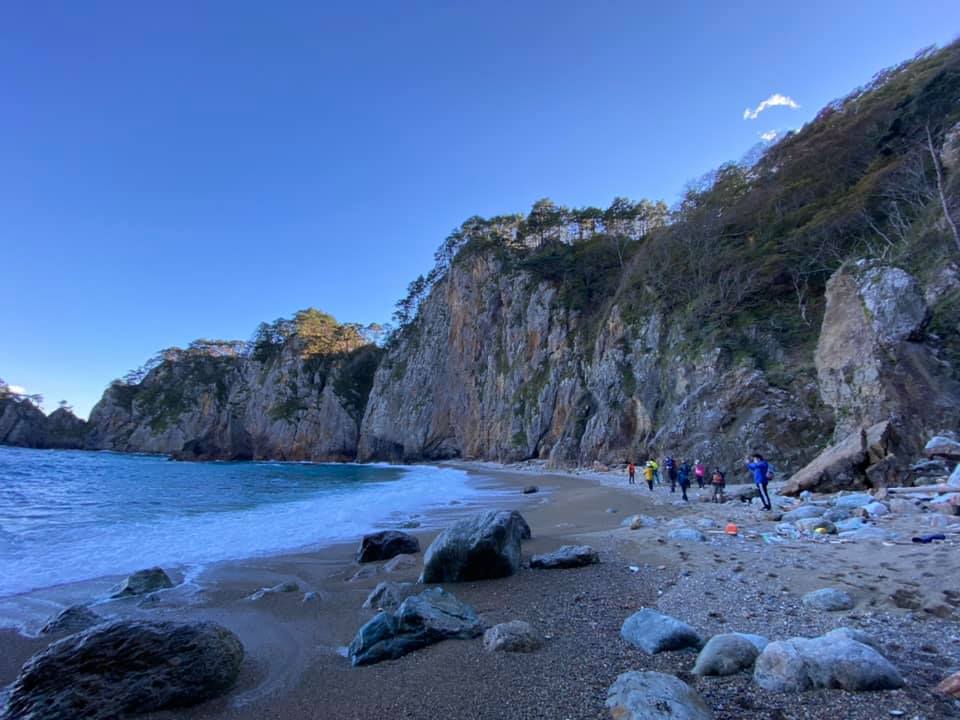
Welcome to Tanohata Village, one of the most spectacular and sought-after destinations along the Michinoku Coastal Trail. Today’s adventure takes you deep into Japan’s raw, untamed wilderness, where towering cliffs, endless ocean views, and rugged landscapes carved over millennia await. This isn’t just a hike—it’s a thrilling expedition through nature’s masterpiece.
But this land is more than just breathtaking scenery—it’s a testament to human resilience. The Tohoku region, known for its bitterly cold winters, relentless sea winds, and unforgiving terrain, has shaped generations of people who refuse to be defeated. Despite facing tsunamis, famines, and unimaginable hardships, the people of Tohoku have not only survived but thrived.
At the Folklore Museum, you’ll step into the past and hear the powerful stories of those who fought to turn adversity into strength. You’ll feel the unshakable determination of the ancestors who called this land home, and perhaps, discover a new sense of resilience within yourself.
After an exhilarating day of hiking and e-bike cycling, we’ll unwind at a spectacular seaside retreat, where fresh seafood and panoramic ocean views create the perfect setting for reflection. As the waves crash against the shore, take a moment to embrace the raw beauty of nature and ponder what it truly means to live, endure,
and belong.
schedule
Depart Hotel === Tanohata Village Folk Museum === Michinoku Coastal Trail Hiking 『Tanohata Area 1』 ・・・Obento Lunch Break == Geo Cycling (or fisherman boat cruise) == Michinoku Coastal Trail Hiking 『Tanohata Area 2』 === Check in to Hotel
DAY3: Harmony in the tsunami’s reality ~Regeneration of life and nature~

Today is a day to face the past, embrace the present, and question the future. What truly happens after a disaster? How does the delicate balance between humans and nature shift in the process of rebuilding?
Our morning begins with a breathtaking hike at Jodogahama, a coastal jewel once described as “the Paradise of the Pure Lands.” Despite the disasters that have struck this region, its beauty remains untouched—timeless, resilient, and awe-inspiring. Weather permitting, we will do some sea kayaking here, as we invite you to experience nature through the eyes of the creatures that call this place home. In their silent survival, you may find an entirely new way of seeing the world.
In the afternoon, we journey to Otsuchi Town, where history and humanity intertwine. There, we will meet a woman who, after the devastation of March 11, chose to leave her home country and settle here. Through her eyes, we will see the reality of that fateful day—not just the human tragedy, but the hidden transformation of the ecosystem as well. In a world where reconstruction often prioritizes people, how have the living creatures adapted? What is gained—and what is lost—when nature is forced to change?
Through powerful stories, immersive discussions, and deep reflection, we hope you’ll walk away not just with knowledge, but with a profound new perspective on resilience, survival, and our connection to the natural world.Nature has endured. Humanity has endured. Now, it’s time to listen.
schedule
Depart Hotel === Michinoku Coastal Trail Hiking 『Shiofukiana Blow hole to Jodogahama Beach』・・・Local restaurant Lunch === Jodogahama Sea Kayak == Tsunami Storytelling Guide in Otsuchi town == Check in to Horaikan Inn・・・Dinner and night activity
DAY4: Harmony in reconstruction ~Contemplating human-centered recovery~
We begin with an unforgettable picnic cruise, guided by Mrs. Isabelle Sasaki, a French woman who fell in love not only with a local fisherman but also with the way of life here—one deeply intertwined with the sea. As we drift across the shimmering waters, we’ll experience firsthand the raw challenges and profound rewards of the fishing industry. What does it truly mean to live by the sea? To place your fate in the hands of tides and storms? Today, you’ll find out.

Then, we step into Rikuzentakata City, once reduced to rubble by the Great East Japan Earthquake. Now, after 13 years of relentless rebuilding, it stands transformed and fortified—a testament to human resilience and cutting-edge engineering. Towering seawalls, raised ground levels, and mass relocation efforts demonstrate the relentless battle against nature’s fury. But can human innovation truly stand against the unstoppable force of the ocean?
At the Rias Ark Museum of Art, we’ll dive deep into the ways civilization has evolved through science and technology—and question the price we pay for progress. How has our pursuit of safety and control shaped the world around us? Are we adapting to nature—or forcing nature to adapt to us?
To close this extraordinary day, we’ll indulge in an exclusive dining experience, featuring fresh seasonal ingredients masterfully paired with local sake from Kesennuma—one of Japan’s most vibrant fishing towns. With each sip and every bite, we’ll savor the essence of a region that refuses to be defeated, where the sea is both a source of sustenance and an unpredictable force to be reckoned with.
This is more than a journey—it’s a challenge to everything we think we know about survival, nature, and the delicate balance between control and surrender.
schedule
Depart Hotel == Michinoku Coastal Trail 『 Koishihama Hike & Picnic cruise 』 == Iwate Tsunami memorial/Rias Ark Museum of Art == The Brewers Table Dinner at a local restaurant ・・・ Check in to Oppawan Terrace
DAY5: Harmony with the sea ~Reflecting on the meaning of life~

Day five takes you on an unforgettable island-hopping adventure, exploring the Urato Islands by boat, nestled along the Michinoku Coastal Trail. This is no ordinary day—it’s a chance to feel the heartbeat of a place that has weathered the storm, both literally and figuratively. As you sail through the crystal-clear waters of Matsushima Bay, you’ll explore three of the Urato Islands, where nature’s raw beauty collides with the unshakable resilience of the people who call these islands home. Here, in the shadow of the tsunami’s devastation, you’ll witness a remarkable story of survival and renewal, one that runs deep through every wave that laps against the shore and every island home you walk past.
The Urato Islands, often called the ‘eight hundred and eight islands’ for their rich, vibrant landscapes, are an extraordinary testament to nature’s majesty. Comprised of four islands and five districts, this collection includes 230 islands and is home to a small yet spirited community of 174 households—around 300 people-whose way of life is steeped in island traditions passed down for generations.
On this final day of your Michinoku Coastal Trail journey, the raw impact of the tsunami is undeniable, yet so is the undeniable strength of the human spirit. The devastation is not just a memory; it’s a powerful reminder of how far we can rise from the ashes. The path ahead leads you to Fukushima, where, in the aftermath of the nuclear disaster, a new chapter of resilience and rebirth is unfolding. This poignant journey is one of reflection and awe, as you stand in the presence of a community that refuses to be defeated, a community that is rewriting its story with unwavering courage and determination.
schedule
Depart == Breakfast at Kitakamigawa Terrace == Oku-Matsushima bay~~~Michinoku Coastal Trail 『 Sabusawajima~Nonojima~Katsurajima 』 ~~~ Marine Gate Shiogama === Check in Hotel
DAY6: Harmony with the invisible ~Striving to Reclaim Hometowns~

On the final two days, we will embark on an unforgettable journey along the Fukushima Coastal Trail.
In the morning, we’ll step into Futaba Town, a place long frozen in time by the nuclear disaster. Even today, only a handful of residents have returned. As we walk, we’ll compare the landscapes we’ve witnessed over the past five days—seeing firsthand the stark contrast between the devastation caused by the tsunami and the enduring impact of the nuclear disaster.
At the museum, we’ll gain a broader understanding of the nuclear catastrophe before diving into a deeply personal story. Norio Kimura lost his father, wife, and daughter in the disaster. His story is not just one of loss but of resilience, determination, and an unwavering message for the future.
In the afternoon, we’ll shift perspectives as we engage in an inspiring dialogue with young changemakers from India. These bold visionaries are tackling the challenges of rebuilding their struggling city, showing us that hope and action transcend borders.
Since the Great East Japan Earthquake, the word “reconstruction” has been widely used. But what does it truly mean? Does rebuilding houses, erecting seawalls, and restoring daily life equate to true recovery? Through the landscapes we traverse and the voices we hear, we hope you will reflect on the profound differences—and similarities—between the tsunami disaster and the nuclear disaster.
This journey is not just about witnessing history—it’s about understanding, questioning, and being part of the conversation that shapes the future
schedule
Depart Hotel === Fukushima Coastal Trail 『 Hiking & Study tour at Futaba town 』・・・Dinner at local Izakaya Restaurant ・・・ Namie Station ++(JR Jobansen)++Tomioka Station・・・Check in to Hotel
DAY7: A Pledge to a New Self ~What Does Happiness Mean to You~
The final day is more than just an ending—it’s a powerful moment of reflection. As we board the train to Hirono Station, we’ll look back on the unforgettable experiences that have shaped our journey. From there, we’ll embark on a meaningful walk with a local guide to Bentenzaki—our ultimate destination.
Along the way, we’ll stop at two newly opened cafés, where we’ll gain insight into the dreams and aspirations of those who have chosen to build a life here. Through their stories, we hope you’ll find a chance to reflect—not just on the trip, but on yourself.
This is a day to pause, converse, and rediscover. To think about the moments that have left an imprint on your heart. To engage in deep dialogue with fellow travelers. And perhaps, to meet a new version of yourself—one shaped by the resilience, hope, and strength of the people of Tohoku.
For the many who call these coastal towns home, life changed in an instant. But through this journey, we hope you’ll reconsider what truly sustains us—food, energy, work, friendship, family, and the meaning of happiness itself.
As our time together comes to a close, I eagerly look forward to seeing you again. With deep gratitude for your visit to Tohoku—a place where people continue to live with unshakable strength and unwavering spirit.
schedule
Depart Hotel・・Tomioka Station++(JR line)++ Hirono Station・・Fukushima Coastal Trail Hiking 『Hirono station to Bentenzaki Shrine』 == Finish at Iwaki Station・・・IwakiStation +++(JR Jobansen HITACHI EXPRESS 24)+++ Ueno Station
More Info
Duration
7 days
Difficulty
Medium